ROBAI
Every part of a robot gets its own small AI model.
RobAI is a course where children build a robot's AI one part at a time. Every part, the light and the buzzer first, has its own small AI model. Children give it wishes, predict what it will do, run it and check it. Atozoai guides every step.
RobAI is designed as a course of 196 sessions. Here is a glimpse of the first 32.
- Designed as 196 sessions
- The first 32 here, in 4 Levels
- Families: Grades 1 to 8
- Schools: Grades 3 to 8
- No kit needed to start
A wish in words. Exact steps out.
In RobAI, every part of a robot gets its own small AI model.
A child gives a wish; the part's model writes exact steps; a small driver carries them out. The driver follows plain rules; the model is the AI.
The child works hands-on with real small models: sets up, predicts, runs and checks. Children do not train models in a session.
Each session works in two worlds: the digital way, where the child gives the exact steps, and the AI way, where the child gives words and a model writes the steps.
Children see what a model can and cannot do: a model that missed some practice fails on the wishes it never saw.
The digital way
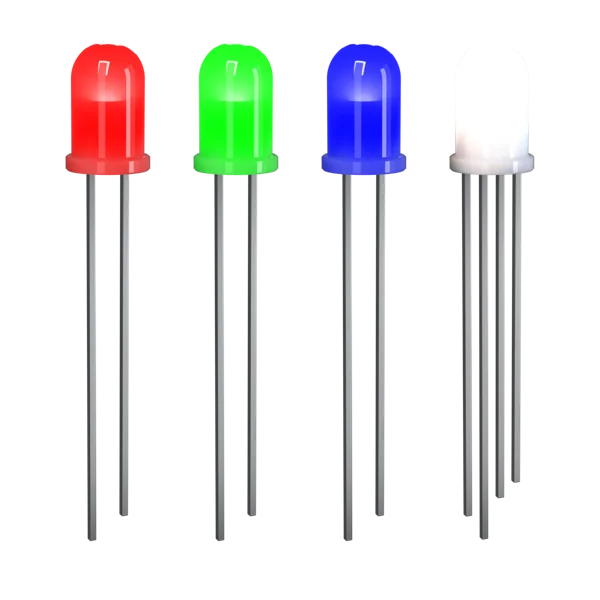
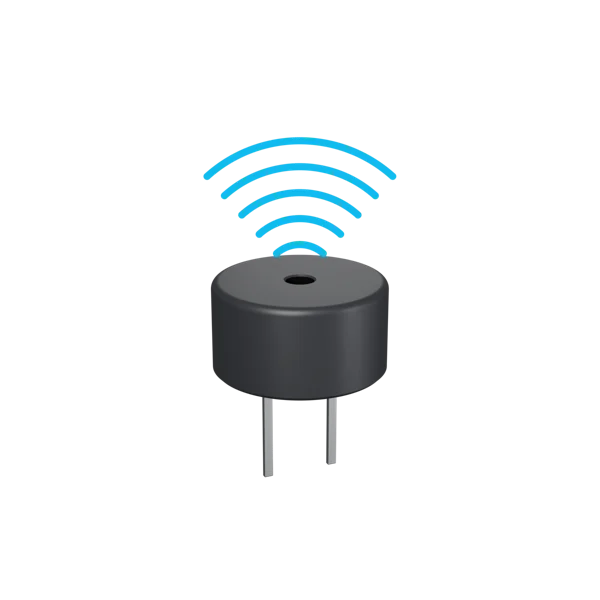
The child gives the light or the buzzer its exact steps, and sees that a machine does exactly what it is told.
The AI way
The child says a wish in words, the part's model writes the steps, and the child checks them.
Real small AI models, checked on every input.
A model is used in a session only if it is right on every valid input, checked from the stored model file, and the page's engine gives the same answer as the training software on every input.
126,060 of 126,060: the light model: right on every one of its valid inputs. In English, as used in the sessions
8,448 of 8,448: the buzzer model: valid inputs right. In English, as used in the sessions
303 of 303: the team model, one wish for both parts: valid inputs right. In English, as used in the sessions
882,420 of 882,420: the light model in Hindi, Marathi and Kannada too. Each pure and mixed with English: right on all of them
59,128 of 59,136: the buzzer model in the same seven forms. English, and Hindi, Marathi and Kannada, each pure and mixed with English
2,121 of 2,121: the team model in the same seven forms. Every one of these inputs was practised
277: model files trained in all. 135 for the light, 82 for the buzzer, 60 for the team
6 of 30 · 25 of 30: we train many and keep few. Buzzer: 6 of 30 trained working models were fully right. Team: 25 of 30.
about 112,000: parameters in each model. The light model: 111,908. A file of about 450 to 520 KB.
11 to 19: thousandths of a second for one answer. On a laptop
On your own device
The models run inside the browser on the family's own device. Apart from telling the app that the session is done, a session page sends nothing anywhere.
Languages
The sessions are in English. The light model also works with wishes in Hindi, Marathi and Kannada, both pure and mixed with English.
A glimpse: the first 32 of 196 sessions.
196sessions, as the course is designed
32sessions shown here, in 4 Levels of 8
about 40minutes a session, one school period
2sessions a week, as designed for families
For families
Children in Grades 1 to 8; younger ones with a grown-up reading along. The app keeps a grade, not an age. The course is designed for two sessions a week, so one Level is one month and these first 32 sessions are four months.
For schools
Courses "RobAI · Grade 3" to "RobAI · Grade 8", each with the first 32 sessions: one school year a grade.
In every session
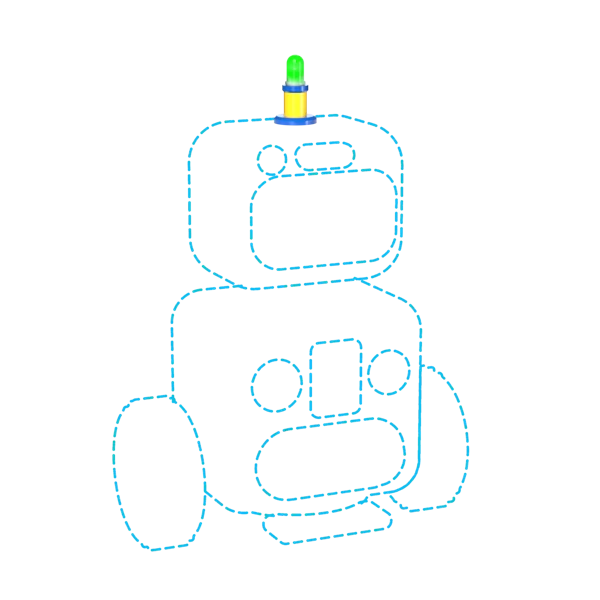
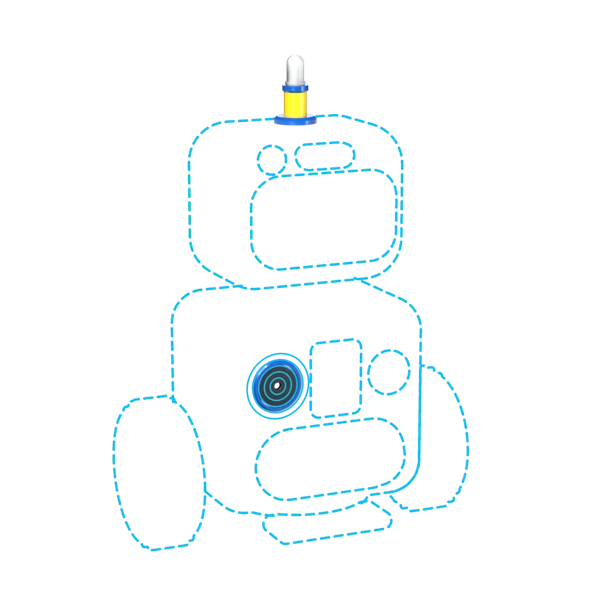
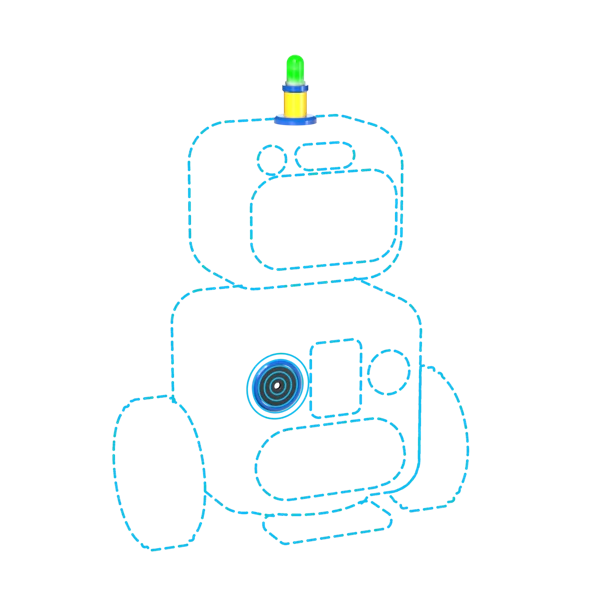
- Every session shows the robot: where we are, what the child did on it, and what comes next. The robot fills in part by part; the whole robot is where the journey leads.
- Atozoai guides every session and every lab.
- Most sessions start at home: the child looks for real lights and beeps around the house (a "Detective" part in 25 of 32).
- Most sessions end with a hands-on part with paper and pencil ("By Hand", 27 of 32) and a take-home task (21 of 32).
- No kit is needed to start: everything runs in the browser.
- A session counts as done only when the child taps "I have finished this session".
What the child does, session by session.
A glimpse of the first 32 sessions of RobAI, which is designed as a course of 196. Scroll each Level sideways.
Level 1 sessions 1 to 8
- 1Lights Around Me
The child finds small lights at home (router, TV, oven, purifier, washing machine), reads their colour and blink, and guesses what each light says.
- 2Meet the RGB LED
The child counts the lights at home and meets the RGB LED: three tiny lights (red, green, blue) in one.
- 3I Give the Steps
The child predicts a colour, then gives the light exact steps: colour, brightness, blinks, timers and a pattern of their own. This is the digital way.
- 4My Light Table
The child writes a light table: a thing at home, what its light says, and the steps for that light.
- 5Words In, Steps Out
The child says a wish in words; Atozoai's model writes the steps; the child checks the steps and what a light cannot do. This is the AI way.
- 6Did I Learn the Rule?
The child tests the model with wishes it never practised, and finds the gap in a model that missed some practice.
- 7Two Ways, One Light
The child makes the same light by hand and by wish, and compares the two ways.
- 8My Light Speaks
The child makes the light speak with seven shared words: ok, alert, error, calm, on, off, status.
Level 2 sessions 9 to 16
- 9Sounds Around Me; Meet the Buzzer
The child listens for beeps at home and meets the buzzer: a low note, a high note, three beeps.
- 10I Give the Beeps
The child gives the buzzer exact steps: on, off, timers, notes, counted beeps, tunes and a tune of their own.
- 11Words In, Beeps Out; Did I Learn the Rule?
The child says sound wishes in words, checks the model's steps, and tests it with wishes it never practised.
- 12Signal Buddy
The child joins the light and the buzzer into a team: one wish, such as "Dinner is ready", said the usual way or quietly, gives each part its word.
- 13My Signal
The child makes a signal for a new case of their own and chooses the word for it.
- 14Lights at Home: My Count
The child counts small lights at home and on two panels, and finds the light that says something is wrong.
- 15Tunes by Name
The child plays tunes from a shelf and calls each by its name or its number.
- 16My Signal Buddy: Show and Tell
The child shows the team at work and says what they like about it.
Level 3 sessions 17 to 24
- 17My Robo's Light Table
The child writes the robot's own light table: all is well, a problem, resting, off.
- 18What Does It Say?
The child hears our words in light and sound, names each one, and guesses what a machine at home is saying.
- 19Steady, Blink, Dark
The child compares steady, slow, fast and timed lights, and what each can say.
- 20Beeps That Count
The child makes counted beeps and learns that the count is the message.
- 21A Day with the Robot
The child plans five moments of a day and gives the robot a signal for each.
- 22The Washing Machine Speaks
The child follows a washing machine's panel through a wash and finds the light for each moment.
- 23My Tune, Step by Step
The child writes a tune of their own, one note at a time, and plays it.
- 24Show and Tell: My Light and Sound
The child picks a light and a sound and shows them together on the robot.
Level 4 sessions 25 to 32
- 25Be the Tester
The child writes tests for the team model and runs them.
- 26Two Lights, One Meaning
The child reads an oven's panel and finds two lights that say one thing together.
- 27Sounds at Home: My List
The child lists beeps at home (done, warning, I heard you) and makes a warning of their own.
- 28Find the Wrong Step
The child finds and fixes the one wrong step that makes a wrong light.
- 29High and Low
The child puts four notes in order by ear and slides a note up and down.
- 30My Signal Project
The child builds a signal by hand, asks the team model, and tests it quietly.
- 31What I Can Do Now: Light, Sound, Team
The child does six small tasks with the light, the buzzer and the team.
- 32My Robo So Far: Show and Tell
The child shows the robot so far and says what each part does.
Hear Atozoai guide the way.
Real Atozoai clips from Level 1 sessions, beside the robot as children see it. Sound plays only when you press play; captions are on. The animation and Atozoai's voice are made with AI, from Atozoai's own lessons and characters, and approved by people.
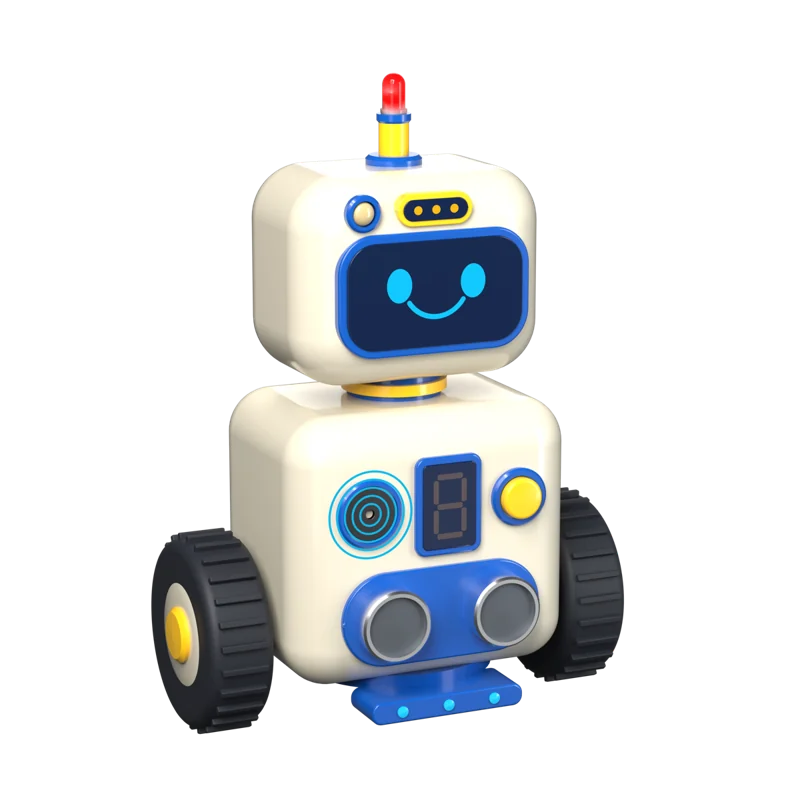
ROBAI, the whole robot.
ROBAI is designed with ten parts:
- a light
- a buzzer
- a one-digit number display
- a button
- a light sensor
- a distance sensor
- two wheels
- line sensors
- a face screen
- a brain
The first 32 sessions cover the light and the buzzer, alone and as a team. The whole robot is the goal: where the child gets to.
What parents, teachers and principals ask.
What is RobAI?
A course where children build a robot's AI part by part. Every part of the robot has its own small AI model. Children give it wishes, predict, run and check what it does.
What does my child need to start?
A browser. Everything runs there, so no kit is needed to start.
Which grades is it for?
Families with children in Grades 1 to 8; younger children do it with a grown-up reading along. Schools use it from Grade 3 to Grade 8.
How long is a session, and how often?
About 40 minutes. Families do two sessions a week, so each Level of 8 sessions is one month.
What does my child actually do?
Looks for real lights and beeps at home, gives a light or a buzzer its exact steps, says wishes in words and checks the steps a model writes, tests a model, finds a wrong step and fixes it. Most sessions end with paper and pencil and a small task at home.
Does my child train AI models?
No. Children work hands-on with real small models that were trained and tested before they reach the child. They set up, predict, run and check. They also see a model that missed some practice, and where it goes wrong.
Are these real AI models?
Yes. Each part has its own small model of about 112,000 parameters, small enough to run in the browser on your own device.
How do you know the models are right?
Before a model is used in a session, it is checked on every input it can be given. The light's model is right on all 126,060, the buzzer's on all 8,448 and the team model on all 303. We train many and keep few: of 30 buzzer models trained, 6 were fully right.
Who is Atozoai?
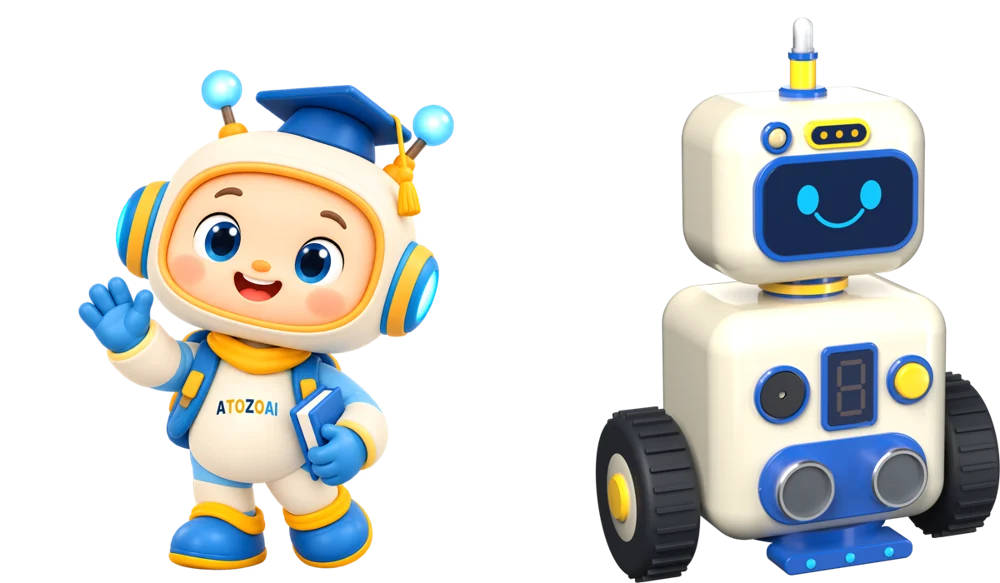
The guide in every session and every lab. Atozoai asks the questions, cheers the child on, and in the AI way turns the child's words into steps.
What will my child learn about hardware?
How a three-colour light makes colours, brightness, blinks and timers; how a buzzer makes notes, beeps and tunes; how machines at home use light and sound to say things; and how two parts work as a team.
Which languages?
The sessions are in English. The light's model also works with wishes in Hindi, Marathi and Kannada, both pure and mixed with English.
Does anything leave my child's device during a session?
The models run in the browser on your device. Apart from telling the app that the session is done, when the child taps "I have finished this session", a session page sends nothing anywhere.
(For schools) How does it fit a school year?
Each of "RobAI · Grade 3" to "RobAI · Grade 8" holds the first 32 sessions: one school year for that grade.
(For teachers) What does a session look like?
Every session shows the robot (where we are, what the child did on it, what comes next). Most have a Detective part at home, a lab or activity in the digital or the AI way, a check, a By Hand part, and a take-home task.
Start RobAI with Atozoai.
Families and schools: write to us for an invite.